
For special education administrators, Behavior Support Plans (BSPs) are easy to put off. Academic, cognitive, and physical IEP goals take center stage, and a student’s BSP often falls to a single person on campus—a school psychologist, a social worker, or whichever teacher inherited the task. When that happens, plans can be challenging to implement and are disconnected from the team meant to carry them out.
That implementation gap matters, because a strong BSP put into action (with fidelity) supports student growth. We built Behavior Support Plans in Goalbook Threads to keep students learning in the least restrictive environment (LRE), give every adult on a student’s team the same plan to follow, and make inclusion workable day to day.
Why It Matters for Special Education Leaders
Behavior planning sits at the intersection of several of your priorities. Built into Goalbook Threads, Behavior Support Plans help your team systemically:
- Support LRE and inclusion. Well-built functional plans give students the scaffolds they need to stay and succeed in general education settings.
- Protect teacher time and reduce burnout. Guided, research-backed steps turn a multi-hour task into one educators can finish so plans actually get written.
- Keep quality and compliance consistent. An evidence-based framework means every plan across your schools meets the same standard, with the research base a review expects built in from the start.
- Build capacity beyond one specialist. A shared, repeatable process lets your whole team—and newer teachers—produce sound plans instead of leaning on a single expert.
How It Works: A Guided, Step-by-Step Process
Goalbook Threads walks staff through the structure of a strong plan, one decision at a time, saving time while maintaining clinical integrity:
- Initial Input: Provide student information and an initial narrative about the behavior concern.
- Target Behavior: Add details to create a clear operational definition of the target behavior. For example, defining physical aggression as forceful physical contact that could cause pain or injury.
- Functional Hypothesis: Generate a hypothesis for why the student engages in the behavior (such as to escape an uncomfortable social situation), then edit it for the student’s specific circumstances.
- Replacement Behaviors: Define and select positive replacement behaviors, such as teaching an independent break request system.
- Custom Strategies: Choose from a customized list of actionable strategies tied directly to antecedents, behaviors, and consequences.
What Your Team Receives
When the steps are complete, Goalbook Threads brings everything together into two things your team can use right away:
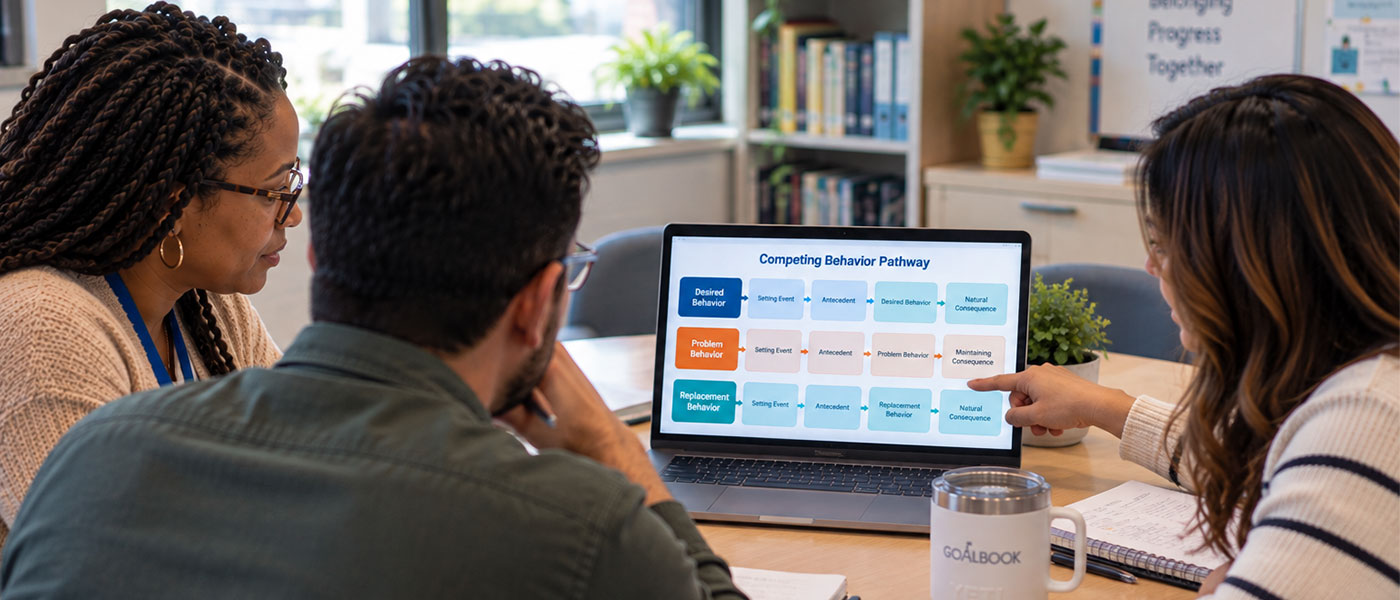
- A single, printable plan to share with a student’s teachers and service providers, featuring the Competing Behavior Pathway—a clean conceptual map that connects the target behavior, its function, and the replacement behavior in a single view the whole team can read at a glance.
- Strategy Implementation Guides that show educators how to carry out each strategy across all tiers of support, down to specific antecedent steps, like assigning a dedicated cafeteria spot to head off a problem behavior before it starts.
Because the plan and its guides live in one place, it’s simple to hand a building administrator or a classroom teacher the same reference and keep implementation consistent across settings.
Get Started
Whether you lead one campus or an entire district, giving educators a structured, research-backed tool makes behavior planning more consistent and more effective to implement.
Activate Behavior Support Plans in Goalbook Threads
Don’t have an account? Learn more!
